
The Conversation Is Opening Up, and It Was Never Just About Recycling
Field notes from a couple of weeks on the road. In some rooms, stakeholders are realizing sustainability is an economic conversation, not a green one. In others, we've still got a long way to go. Either way, it's a young conversation, and worth nurturing.
By Zena Harris, SPEC, Founder & President, Green Spark Group
I've spent more of the last couple of weeks on the road than off it. I sat in sessions at the Hollywood Climate Summit, met with stakeholders in Tennessee, and stood trackside at a NASCAR build in San Diego. Different cities, different formats, different stages of the journey.
What struck me wasn't a single headline. It was a shift in how people are willing to talk about sustainability work. In more and more rooms, stakeholders are opening up to something I've been saying for years:
Sustainability isn't a recycling conversation. It's an economic one, it’s a people one. The moment that realization lands, everything changes, it stops being a values debate and becomes a business and human discussion.
That openness isn't everywhere yet. I'll be honest about where it isn't. But it's real, it's growing, and it's worth paying attention to.
In California, the economic argument is landing
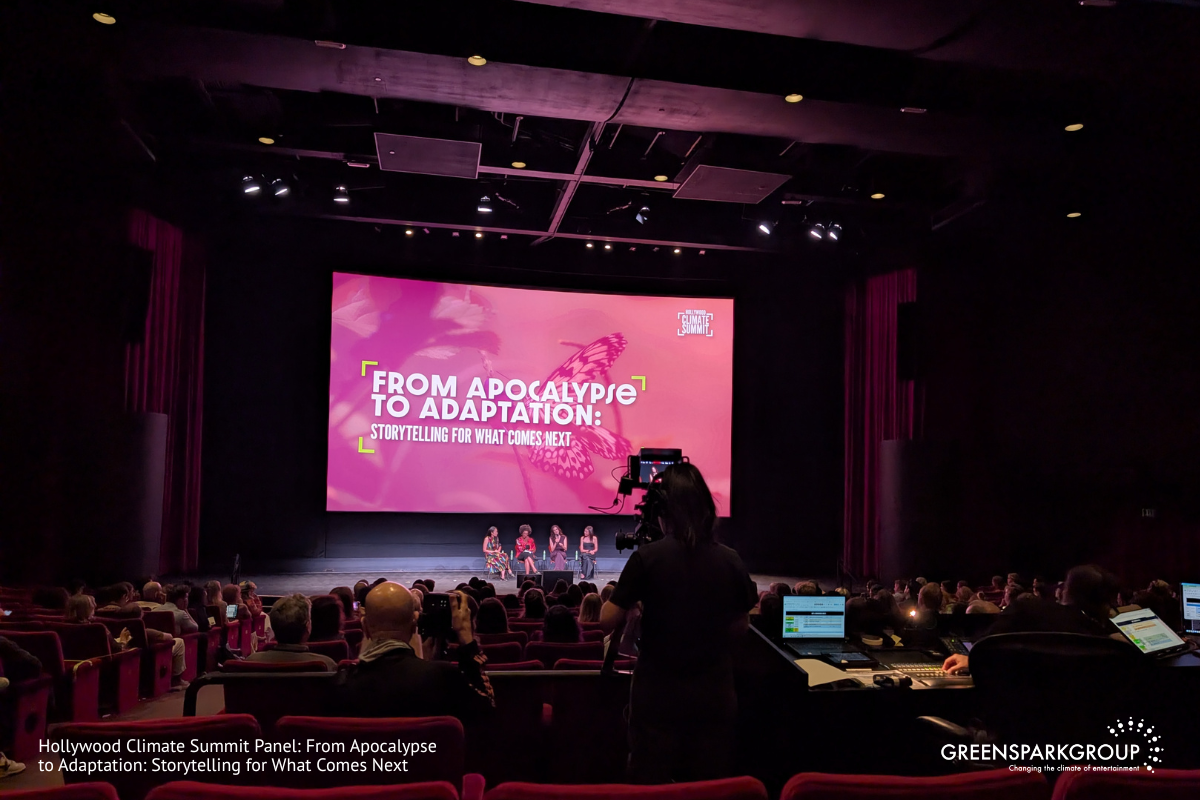
Hollywood Climate Summit
The Hollywood Climate Summit isn't a compliance conference. It's a creative one, climate storytelling, fresh perspectives, and a genuine appetite to make the work irresistible rather than dutiful. Even the food on the agenda made the point: the more we normalize the better options, the more they simply become the options.
But underneath the creativity, the economic argument is what's resonating now. Sustainability in content creation is good for business, and California has the innovation, the infrastructure, and the crew to deliver on it. Hollywood is still the center of the world for the magic of moviemaking, and that brand is also a pillar of economic development in Southern California. More and more people in those rooms understand that protecting it isn't about doing the right thing in the abstract. It's about keeping the heart of this industry working, prosperous, and wildly creative.
In Tennessee, they're ready to talk business
Tennessee was a different register: practical, forward-looking, and ready to have the harder conversation. Three core issues in the film & TV industry are worth watching:
Incentives in North America are shifting
Environmental disclosure is on the horizon
Production budgets are tighter than they've been in years.
That combination turns sustainability into exactly the kind of conversation a business wants to have. Green incentives can become a genuine competitive advantage, one that appeals to nimble companies and to the next generation of talent and crew. Engaging local stakeholders isn't a nice-to-have; it's how you actually shift what happens on set and in the supply chain, and the cost savings are real and consistent - they compound when you integrate them across a slate rather than chasing them one production at a time. What encouraged me most was the openness to talking about these issues on the horizon and the opportunities to engage on them.
At a San Diego speedway, a reminder of how far we have to go
Then there was the NASCAR build. Walking the course, I watched generators get deployed to every corner and behind the finish line, most of them, as far as I could tell, were likely for powering the camera and broadcast operations.
I'll be candid: in broadcast and live-event operations, this conversation hasn't fully arrived yet. Distributed diesel is still the default, and the economic and operational case for alternatives hasn't entered the discussion the way it has elsewhere. The live music world has spent years proving out battery units paired with solar for exactly this kind of distributed load. That playbook is ready to be borrowed, but the door of possibility has to open first.
I don't say any of this as a criticism. It's a map of where the work still is. Different corners of our industry are at very different stages, and that's normal. Progress is uneven, and pretending otherwise doesn't help anyone.
People are arriving in their own time
Underneath all of it ran one consistent thread. On a personal level, people care. The gap isn't conviction, it's translation. Not everyone is fluent in "sustainability language," and a lot of capable people simply don't yet know how to bring these practices into their own work.
What I've learned is that you can't rush this part. People come to sustainability, and to their own realizations about it, in their own time. The job isn't to push harder. It's to keep the door open, stay generous, and make the economic case clear and useful for whenever someone is ready to walk through it.
A young conversation, worth nurturing
Here's what I want to leave you with. We've been talking about sustainability in this industry for years, and it's easy to feel like we should be further along by now. But measured against how industries actually change, this is still a young conversation. Young conversations need nurturing, not judgment.
Any action is worth celebrating, even the imperfect, advocacy-flavored, lackluster-looking ones, because that's how momentum builds. We can't afford to get down on each other. The progress I saw this month was real. So is the distance left to go. Both things are true at once, and holding them together, patiently, generously, with the economics in plain view, is how we keep this moving.
--
Zena Harris, SPEC is Founder and President of Green Spark Group, a sustainability consultancy for the entertainment industry. If your company is ready to have the economic conversation, or just figuring out where to start, take our assessment to identify your next steps.
